
Why I Write Elemental Goddesses Instead of Borrowed Pantheons
I was in college the first time I read Wild Seed by Octavia Butler.
I was already a huge fantasy reader by then. Pretty much for my entire life. But I sat with Octavia Butler’s Anyanwu and felt something shift that I did not have language for yet. Anyanwu was not exactly an elemental goddess. She was a shapeshifter, a healer, a Black woman in fiction whose power did not come from a man, or granted to her by a council of gods. It was hers and she’d carried it for centuries.
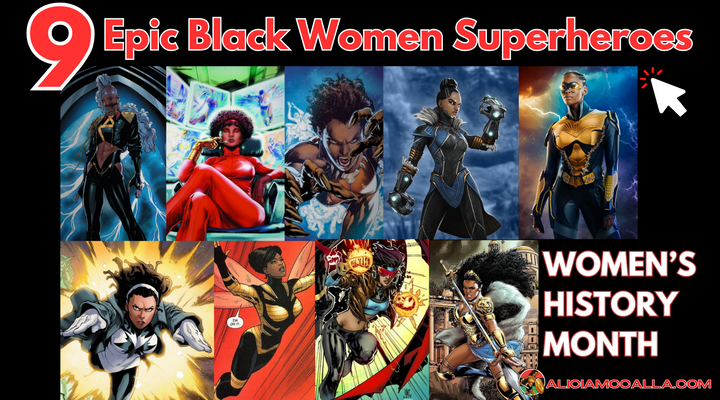
Before her, I was intrigued by Morgan le Fay in Marion Zimmer Bradley’s novels, because Morgan had real power. Later, in my older years, it was Storm in the X-Men, Vixen in DC and Sherrilyn Kenyon’s Danger Cassidy in the Dark-Hunter series, a woman built like a weapon with the kind of authority I was still not seeing in Black heroines. As I think about it, I don’t remember learning about or reading a Black elemental goddess. So when I began my journey, I patched her together out of who was available, the way a lot of Black women readers do.
And once I noticed I was patching, I could not unsee it.
What An Elemental Goddess Actually Is...
An elemental goddess is a divine feminine figure whose power runs through a force of nature like earth, wind, fire and water. Across West African and diasporic traditions, elemental goddesses show up over and over.
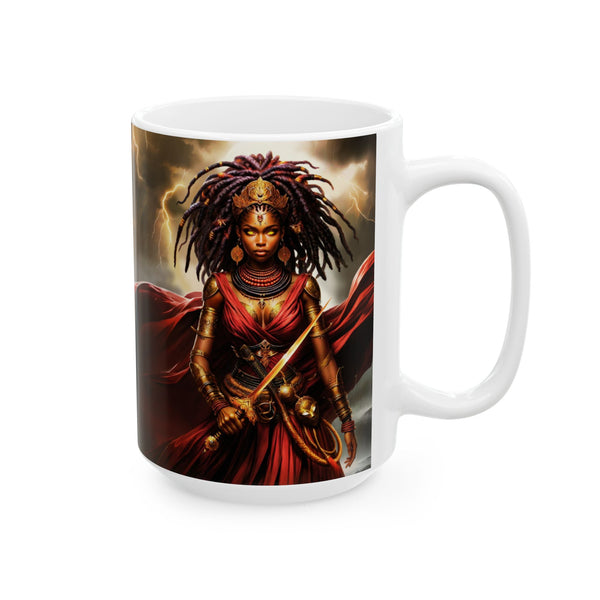
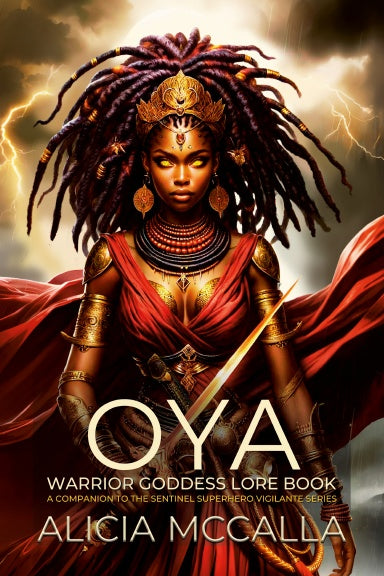
Oya rides lightning and the storm that comes through to clear everything out. Oshun is river water, which means she is sweetness, fertility, and a current strong enough to drown you if you misjudge her. Yemaya is the ocean Mother.
I want to say something honestly here because it is part of why I waited so long to write these characters.
I had been afraid of getting it wrong. If I’m being honest, I am not a priestess. I am a Black American woman who came to these traditions as a reader, researcher and a writer, and the fear of being called out by people who know the tradition at a deeper level kept me quiet longer than it should have.
I am saying that out loud because I think it is part of why we do not have more Black elemental goddesses in mainstream fiction.
A lot of writers are scared of being told we did not earn the right or of getting a detail wrong and having the internet decide we are not Black enough or African enough or serious enough to be writing these women at all.
I wrote Oya anyway. I wrote her because the alternative was leaving the page blank, and I was not going to do that to the next Black girl who picks up a fantasy novel looking for herself.

Why I Refused to Just Borrow a Pantheon
I could have. Plenty of writers do. I could’ve easily have taken a Greek goddess, given her brown skin with a new name, and call it representation.
I made a decision that if I was going to put a Black woman at the center of something epic, then she couldn’t be wearing some other culture’s myth. I wrote about the cultural side of this in my post Why Black Goddesses Matter.
Why Elemental Magic is the Right Language for Black Women’s Stories
Elemental goddesses feels accurate to me as a way to display Black women’s supernatural power in fantasy stories.
Plus there the other side, of how Black women have been taught to apologize for our force. To make ourselves easier to be around so nobody gets uncomfortable.
My thinking… You can’t ask a hurricane to be quiet or an earthquake to be polite so the house stops shaking.
And in so many cases, I see Black women as either being written as rage-free or rage-punished but in truth, a storm goddess lets anger be weather. It’s not a character defect that needs to be managed.
My heroines carry elemental power the way Black women actually carry things... in transformation with a cost.
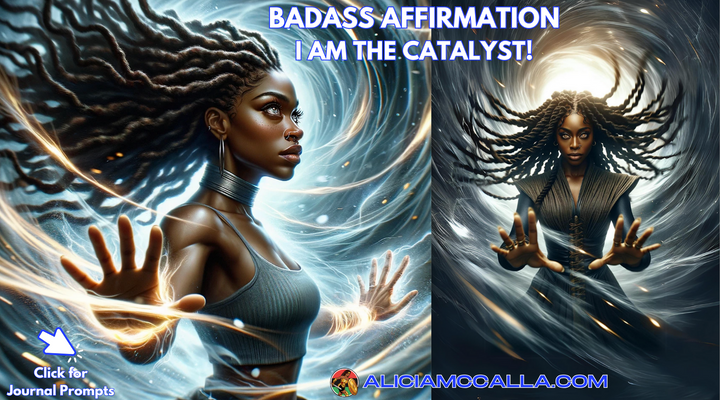
If you ask me what kind of elemental goddess, I would be. I'd say I’m an Earth goddess. When everybody else in my life is panicking, I am generally the one who stays standing. That is the kind of power I have lived inside my entire life and writing it into a goddess on the page is its own quiet act of recognition.
The Warrior Part
Here is what I figured out after years of doing this. The woman I keep writing, the one who shows up in every book whether I plan her or not, is also a warrior. She carries her element in her body and she is strategic about where it lands.
I also have to admit something. I am a complete sucker for the chosen-by-a-god storyline. Always have been. The mortal who gets tapped on the shoulder by something ancient and powerful and is told, “It is going to be you.” I can’t resist it.
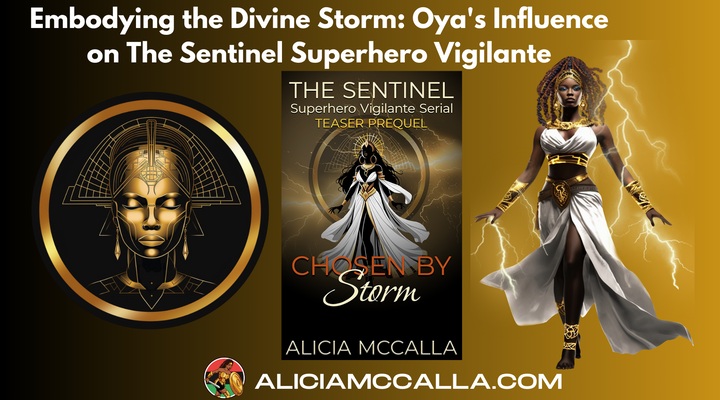
So when I built Tia Jackson, The Sentinel, I knew from the very beginning that she had to be chosen by a Black goddess. That mattered to me more than almost any other decision I made about her.
Tia moves through Metronix City carrying lightning punches and kicks she did not ask for. The question is never whether she is strong enough. The question is what she is willing to spend, and what she owes the goddess who picked her.
Step into Oya’s Storyworld
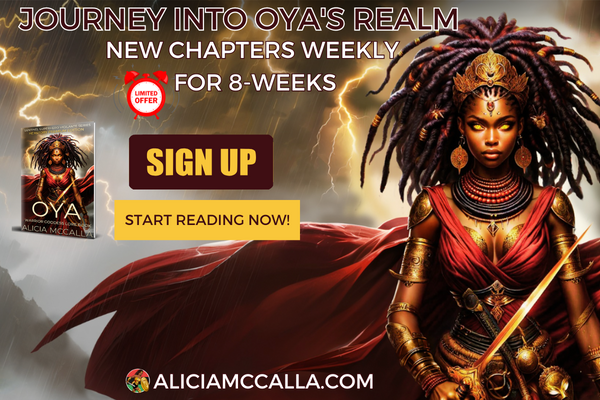
The Oya Warrior Goddess Collection is where the storm becomes a story. It has my actual research plus a fiction mini-season. There’s also the Cataclysm book playlist, the journal, and merch carrying Oya’s colors.
No matter what, I’m excited to be writing elemental goddesses that look like me and I’m proud to carry on in the tradition of Octavia Butler.
Keep Reading